Sino-German Dialogue on Capacity Adequacy in Power System: Advancing Security of Supply in Energy Transition
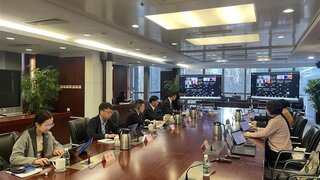
As the power system rapidly shift towards high shares of variable renewable energy, ensuring sufficient and reliable capacity has become a central policy challenge for both China and Germany. On 16 December 2025, the Sino-German Workshop on Capacity Adequacy in Power System was successfully held in Beijing. Co-hosted by GIZ, Energy Development Research Institute of China Southern Power Grid, dena and Agora, the workshop provided a dedicated platform for in-depth technical and policy exchange on approaches to maintaining system reliability under changing market and system conditions. More than 90 experts from China and Germany participated on site and online, underlining the strong interest in bilateral dialogue on this increasingly relevant topic.
Germany and China: shared challenges in capacity mechanism and renewable integration
In Germany, now wind and solar power can cover electricity demand during periods of high generation, but extended phases of low renewable output still require sufficient reserve capacity to secure supply. Capacity mechanism design needs careful design, as capacity remuneration schemes could strongly shape market incentives. It must balance system reliability with cost efficiency without locking in new fossil-based generation that could delay the phase-out of coal and gas. In the 2024–2026 power system planning period, around 2,000 MW of dispatchable generation or flexibility capacity has already been secured through competitive auctions. Current debates focus on the design of backup mechanisms such as the “Power Station Strategy” and the potential introduction of a capacity market, discussed in both centralized and decentralized forms.
China faces a dual challenge: rising electricity demand alongside the large-scale expansion of variable renewable energy, which is placing growing pressure on security of supply. As a result, existing approaches to capacity adequacy are increasingly strained and require further innovation. Key priorities include improving capacity forecasting, better assessing effective capacity, and optimising the overall mix of resources. Capacity mechanism design must also be closely aligned with other energy policy instruments. This includes stronger integration of market-based mechanisms and planning frameworks, as well as closer coordination between spot markets and capacity remuneration schemes. In addition, capacity arrangements designed to address extreme events need further strengthening.
Turning shared challenges into shared solutions
The workshop demonstrated the importance of structured, evidence-based dialogue between China and Germany on complex power system challenges. Germany’s ongoing efforts to refine capacity adequacy mechanisms amid the nuclear phase-out and coal exit, and China’s exploration of capacity pricing, resource planning, and market coordination in the context of rapidly expanding renewable energy, demonstrated complementary strengths and forward-looking approaches on both sides.
With aligned interests and distinct yet complementary perspectives, China and Germany have significant potential to deepen cooperation in the power and energy sector. Expanded joint research, more regular policy dialogue, and practice-oriented exchanges can help generate robust, internationally relevant solutions—supporting the development of secure, resilient, and low-carbon power systems in both countries.